Multiscale Modeling and Intervention for Improving Medication Adherence
NCI R01Using longitudinal mobile, wearable, self-report, and medication-taking data to understand the behavioral and contextual factors that shape endocrine therapy adherence among breast cancer survivors.
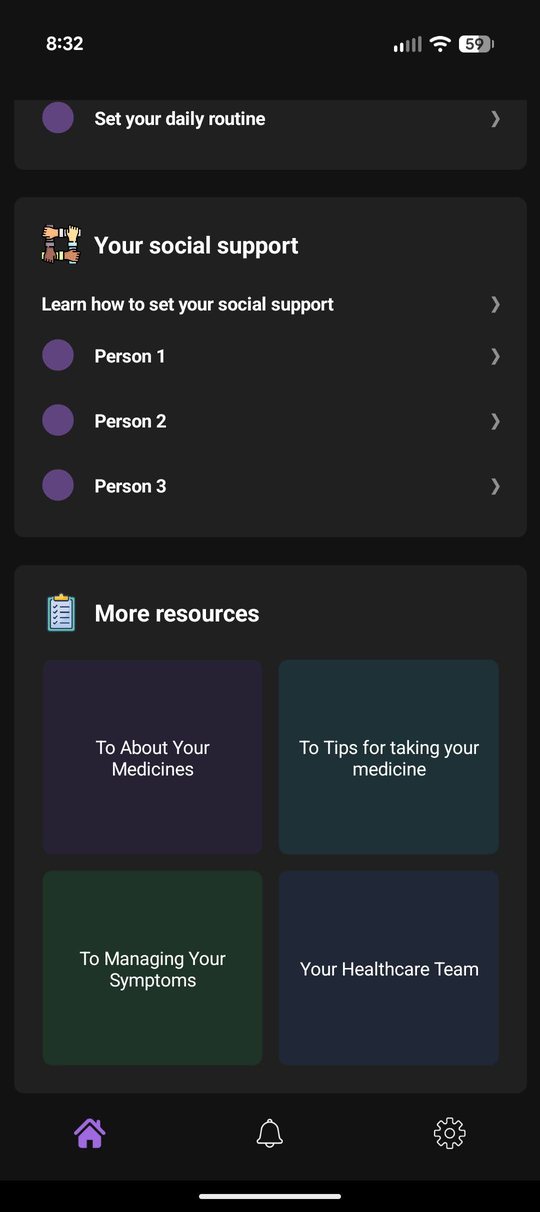 Daily routine & social support
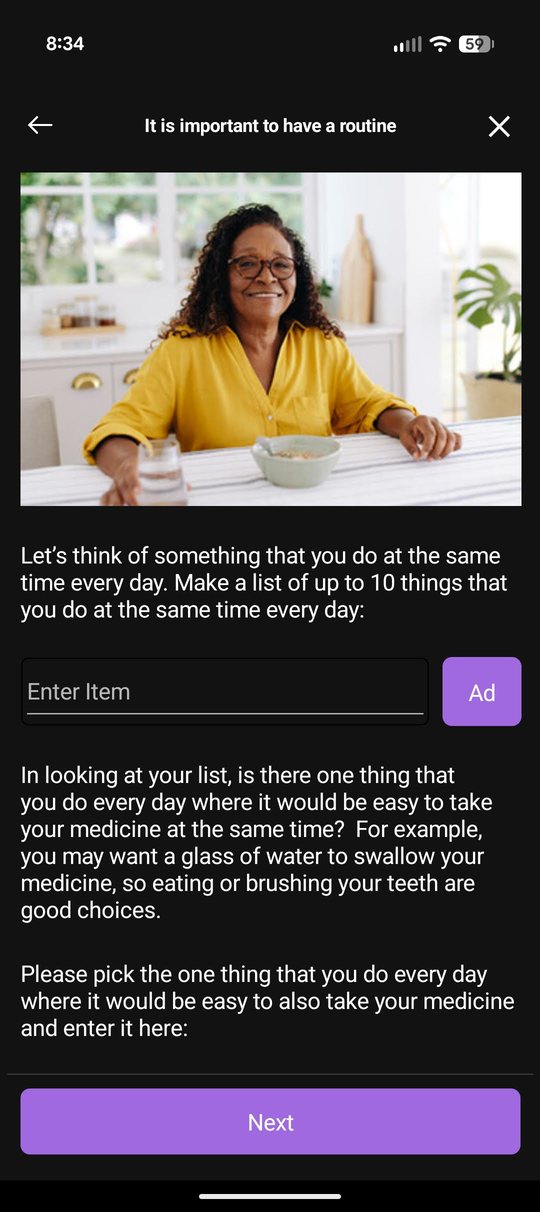 Anchoring medication to a routine
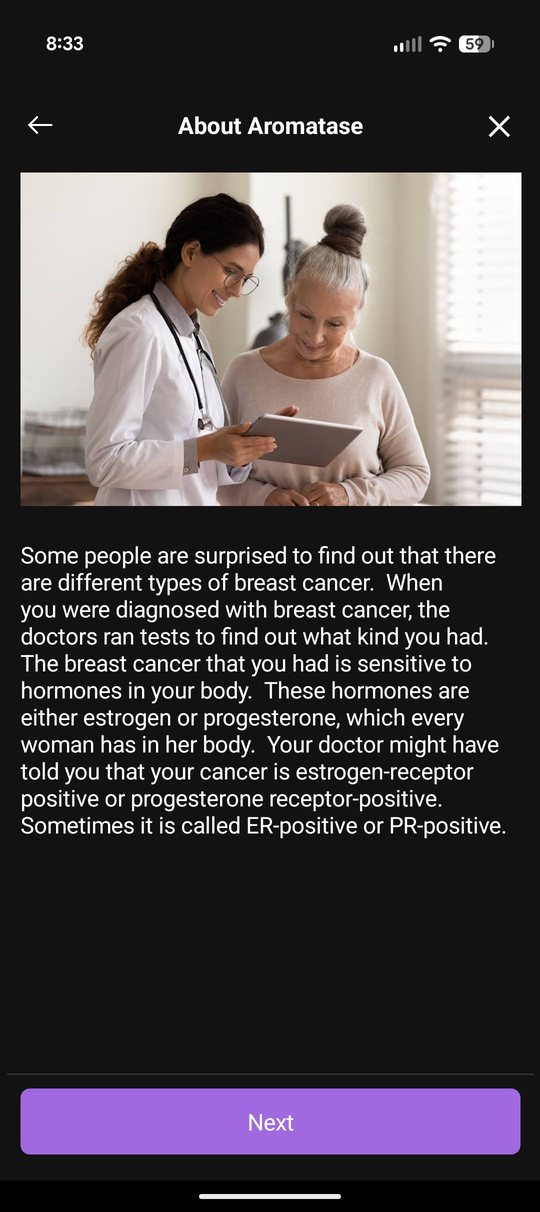 Education about endocrine therapy
Description
Long-term adherence to endocrine therapy is critical for reducing breast cancer recurrence, yet medication-taking behavior can change over time and is shaped by symptoms, daily routines, activity, sleep, and other aspects of everyday life. This project uses longitudinal multimodal sensing and computational modeling to understand and predict endocrine therapy adherence among breast cancer survivors, integrating medication event monitoring with smartphone-based assessments, wearable measures of activity and sleep, symptoms, and behavioral and contextual data. We develop personalized modeling approaches that account for differences across individuals, changes within individuals over time, and the missing and irregular data common in longitudinal health studies. By identifying patterns associated with subsequent medication-taking, this work aims to better understand when and why adherence becomes challenging and inform future approaches for providing personalized adherence support.
This project models endocrine therapy adherence as a longitudinal multimodal problem. Personalized patterns are learned across routines, physiology, symptoms, and medication-taking events while accounting for small cohorts, missing and irregular observations, temporal dependencies, and cross-modal interactions.
Modeling Focus
Longitudinal multimodal adherence modeling presents several methodological challenges. The cohort is small and sparsely observed, limiting the feasibility of training high-capacity sequence models or fully subject-specific models without overfitting. Endocrine therapy adherence also shows substantial inter- and intra-individual heterogeneity: participants differ in routines, activity, sleep, physiological profiles, symptom burden, and self-reported experiences, while each participant's behavior may shift over time.
- Estimate a multiscale adherence state from medication events, symptoms, physiology, activity, sleep, and self-report.
- Model temporal dependencies despite missing, sparse, and irregular observations.
- Represent cross-modal interactions without overfitting small-cohort data.
- Translate model outputs into reflective support rather than heavy messaging.
Publications
- 2026M. Gonzales IV, C. Garcia-Alcaraz, N. Kaur, A. N. Baglione, S. Livermon, L. E. Barnes, and K. J. Wells. Improving Long-Term Adherence to Endocrine Therapy Among Breast Cancer Survivors: Development of a Multiscale Modeling and Intervention System. JMIR Cancer, 12, e68255, 2026.
- 2025F. Yuan, N. Kaur, Z. Wang, M. Gonzales IV, C. Garcia Alcaraz, G. Estrella, K. Wells, and L. Barnes. Multimodal Sensing and Modeling of Endocrine Therapy Adherence in Breast Cancer Survivors. Proceedings of the ACM on Interactive, Mobile, Wearable and Ubiquitous Technologies, 9(4), pp. 1-33, 2025.
- 2025N. Kaur, M. Gonzales IV, C. Garcia Alcaraz, J. Gong, K. J. Wells, and L. E. Barnes. A computational framework for longitudinal medication adherence prediction in breast cancer survivors: A social cognitive theory based approach. PLOS Digital Health, 4(6), e0000839, 2025.
Team
-
 Indrajeet Ghosh Postdoctoral Research Associate
 -
 Mark Rucker PhD, Graduated Fall 2025
 -
 Kristen Wells Professor, San Diego State University
 -
 Laura Barnes Professor, University of Virginia